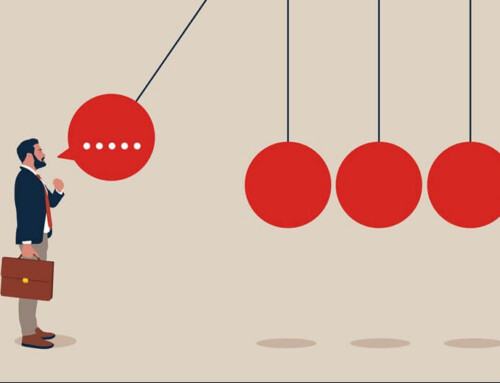
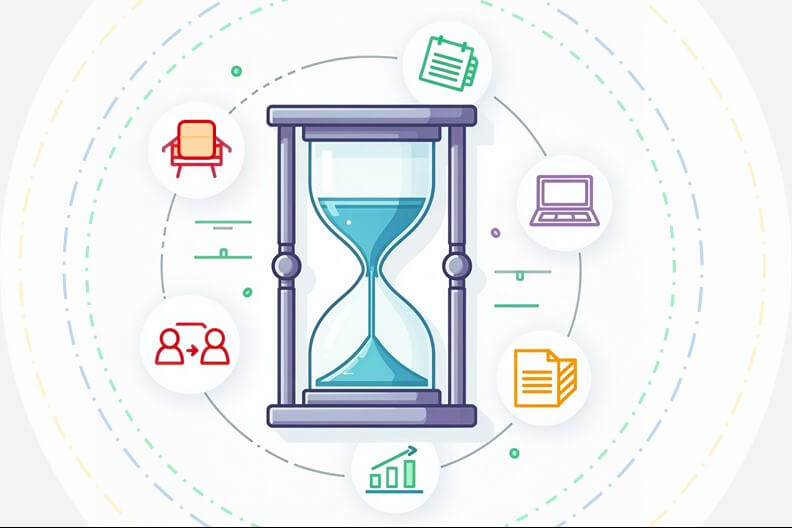
Senior leaders often confuse the total minutes spent on agenda items in a global meeting with actual employee engagement. This practice assumes that corporate value scales directly with the volume of information delivered from the main stage. Therefore, the default instinct is to crowd the schedule with corporate updates, product roadmaps, strategic software briefs, or intense training.
But the reality is that a packed agenda equates to widespread audience exhaustion rather than operational clarity. When meeting participants leave an event overwhelmed by dense slide decks, the organization fails to secure its expected performance return. For example, within the technology sector, research shows that frontline buy-in remains a critical predictor of whether complex product rollouts succeed or fail in the field (1). Therefore, meeting planners must reframe how they measure event performance, shifting the focus away from total stage hours and toward the actual capacity of workers to process and execute corporate directives.
THE COGNITIVE LIMIT OF ENTERPRISE PRESENTATIONS
When software engineers or sales specialists tune out during detailed technical rollouts, event organizers often attribute the issue to low motivation. The true barrier is biological. The human brain possesses a strict structural limit on how much new data it can simultaneously hold and organize. Cognitive scientists define this capacity through Cognitive Load Theory, which notes that learning retention drops sharply when the mind is exposed to continuous content without structured intervals to process the information (2). Piling complex strategic initiatives into consecutive blocks forces the audience into deep mental fatigue. By the second afternoon of a conference, workers may appear attentive, but their capacity to absorb new metrics vanishes. Restricting presentation volume actively improves the value of the remaining sessions. For example, a major enterprise software developer launching an enterprise platform might reduce its main stage technical keynotes from two hours down to forty-five minutes. This choice requires executive presenters to eliminate secondary corporate filler and highlight only the most critical field directives. Organizers must establish firm internal boundaries against schedule packing, capping continuous content delivery before audience fatigue ruins the learning window.
REBUILDING THE AGENDA AROUND PROCESSING INTERVALS
Transforming abstract corporate strategies into clear field action requires event organizers to replace standard coffee breaks with purposeful processing intervals. A networking session is not merely a social addition to a corporate gathering. It serves as a vital cognitive tool that allows teams to debate, clarify, and internalize new operational models. Data shows that enterprise programs focused on technical mastery through collaborative learning models drive higher quota attainment metrics (3). To implement this strategy effectively, planners should organize the daily agenda into a repeatable three-step sequence.
- Audit the current presentation matrix. Identify every slide deck designed to introduce a new technical specification or sales framework, and enforce a strict forty-five-minute limit on stage time.
- Fix the transition immediately following the presentation. Instead of releasing attendees into an open lounge, provide a specific operational prompt before the session concludes. For instance, instruct regional sales managers to spend the first ten minutes of the break discussing how a new compliance policy alters their standard customer demonstration process.
- Scale this collaborative model across the entire multi-day event. By shifting from unstructured social hours to focused peer-to-peer contextualization blocks, employees can identify hidden implementation bottlenecks before they return to their local offices. This deliberate structure ensures that workers challenge new ideas, interpret them through their local field realities, and build practical execution plans before leaving the venue.
MEETING DESIGN AS A COLLABORATIVE CATALYST
The physical layout of a corporate venue often dictates attendee behavior far more effectively than the text on an agenda. Traditional conference spaces prioritize massive presentation halls arranged in rigid rows facing a central stage. This setup enforces passive listening and actively blocks horizontal communication between participants. When a presentation concludes, attendees are forced into cramped corridors that restrict movement and discourage meaningful interaction. Reclaiming the event investment requires engineering the physical environment to support natural team communication.
Research indicates that low-value administrative hurdles slow down operations and prevent people from getting things done. However, when the administrative burden is removed, the result is an increase in overall corporate output metrics (4). The same bottlenecks can occur during a meeting when the agenda is overloaded and space is limited. In meeting design, the solution can be as simple as allocating a large portion of the total event floor plan to open collaboration zones located directly outside presentation exits. In addition to space, design can also redistribute time so that one-third of the event agenda is spent on networking and personal interaction.
Planners can swap traditional theater seating for modular tables, comfortable lounge groupings, and decentralized refreshment hubs. Spreading hospitality assets across the entire venue floor naturally breaks down cross-departmental corporate silos. Instead of migrating to a single crowded dining hall where participants stick exclusively to familiar teammates, workers naturally split into multi-functional discussion circles. These simple spatial and time changes allow specialists from different regional offices to share insights, debate field challenges, and coordinate their execution plans without time-consuming hurdles, red tape, and procedural complexities.
TO SUM IT UP
Designing a high-consequence corporate meeting that balances content delivery with structured peer interaction is a core business decision, not a basic administrative task. When corporate leaders allow agendas to become overpacked, they exchange strategic alignment for audience burnout. The actual return on an event investment is determined by what employees remember and execute once they return to the field. By respecting the biological limits of human attention and optimizing physical environments for collaborative processing, event organizers protect both their corporate resources and their workforces. Event planners should review their upcoming calendar, target current data saturation points, and protect a minimum of one third of all hours for interactive group reflection. Enforcing this balance transforms a routine corporate gathering into a reliable engine for long-term operational success.
Planning an enterprise corporate meeting or event? Contact Gavel International to learn how our global meeting planning services can build balance into your upcoming agenda.
_______________________
SOURCE(S):
1 https://www.bain.com/insights/closing-the-strategy-to-performance-gap/
2 https://link.springer.com/article/10.1023/A:1022193728205
3 https://www.gartner.com/en/sales/insights/sales-enablement
4 https://www.forbes.com/sites/forbescoachescouncil/2017/12/20/how-to-remove-low-value-tasks-to-increase-productivity
This article was last updated on August 12, 2026

- When Niceness Becomes a Workplace Liability - September 21, 2026
- Turn AI Learning Into Workplace Capability - September 14, 2026
- Minimizing Process Friction for Faster Pipeline Execution - August 31, 2026