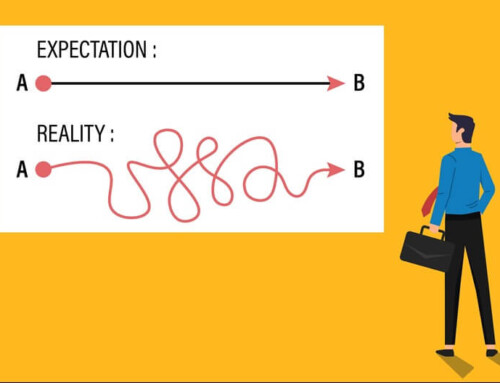

Every business measures productivity, yet very few track the internal friction that quietly erodes it. Operational resistance rarely shows up as a clear line item on a quarterly report, but its financial impact ripples through every team. It is the steady accumulation of uncoordinated communication, bloated approval loops, and misaligned handoffs that force employees to spend more energy navigating internal systems than doing their actual work. When this friction becomes part of daily life, performance does not collapse overnight. It degrades gradually, showing up as slower execution, burned-out teams, and compressed margins that are hard to trace back to a single root cause. Leaders who try to fix the problem by simply hiring more people end up inflating payroll while leaving the underlying inefficiency completely untouched.
LOCALIZED METRICS AND THE HIDDEN COST OF INTERNAL FRICTION
Internal friction rarely announces itself with a sudden crisis. Instead, it thrives in the gaps between departmental goals, where individual teams chase their own narrow targets without seeing the bigger picture. When a department focuses strictly on its own key performance indicators, it often creates unintended delays and extra work for adjacent teams. A cost-cutting push in one corner of the business can easily trigger massive operational costs elsewhere, turning an apparent budget win into a net loss for the entire company.
The Downstream Risk of Isolated Cost Reduction
Consider how misaligned goals might play out in healthcare operations. Supply chain teams are under constant pressure to consolidate products and hit volume discount tiers through Group Purchasing Organizations. To streamline vendor lists and lower unit spend, a purchasing team decides to eliminate specialized IV swab sticks and replace them with standard alcohol wipes. On paper, the decision looks like a clear victory because swab sticks cost many times more per unit than standard alcohol wipes.
However, a strict focus on supply costs overlooks clinical reality. Swab sticks provide far better antiseptic coverage during bedside catheter placements, significantly lowering the risk of bloodstream infections. After transitioning from swab sticks to standard alcohol wipes, preventable IV infections inevitably rise. Under value-based care rules, a single hospital-acquired infection generates over $20,000 in non-reimbursable care costs.
Beyond direct financial penalties, these preventable clinical issues pull vital resources away from patient care. Treating an avoidable infection extends hospital stays, consumes dozens of unscheduled clinical hours, and forces staff into reactive care protocols. A decision meant to save pennies on basic supplies ends up tying up hospital beds and draining staff capacity, proving how isolated cost targets can undermine an entire organization.
Quantifying the Organizational Capacity Tax
Workplace productivity research from Gartner highlights the real cost of uncoordinated management practices. Their 2025 study reveals that unaligned operational approaches quietly drain workforce output. On the other side, implementing structured, cross-functional alignment recovers up to 11% in total employee capacity (1). When leaders fail to look at the ripple effects of localized decisions, they end up paying a steep price in lost productivity.
HANDOFF FAILURES AND PIPELINE VELOCITY
The main bottleneck in business execution is rarely individual effort. It is the time work spends sitting idle as it passes between specialized departments. Think about mortgage origination workflows, where a single application travels through credit checks, income verification, title reviews, property appraisals, and contract signoffs. The file rarely stalls because an underwriter is slow; it stalls during the silent wait-states between teams when no one actively owns the handoff. These approval delays stall revenue, frustrate clients, and create persistent friction that slows down overall pipeline momentum.
Eliminating Administrative Wait-States
Work stalls during handoffs primarily because no single person owns the transition between departments. When work moves across teams without clear ownership or automated escalation rules, idle time builds up unchecked. Research from McKinsey & Company shows that using structured, cross-functional execution models removes coordination overhead and handoff friction. In fact, these models deliver up to a 30% efficiency gain across complex operating environments (2). Unlocking this hidden capacity means shifting focus away from individual activity metrics and focusing on overall throughput speed.
PRO TIP: To eliminate hidden handoff delays, track pure idle hours during transfers rather than total cycle time. Mandate an automated rule: if a file sits untouched in a queue past 24 hours, it escalates to a cross-functional owner authorized to resolve administrative blockages immediately.
UNALIGNED SIMPLIFICATION VS RIGID CONTROL
As organizations grow, leadership teams often assume that adding layers of oversight guarantees better risk management. In reality, over-engineered approval chains introduce heavy delays without preventing real operational errors. This creates a frustrating governance paradox. Rigid, multi-tiered sign-off structures slow execution to a crawl, driving frustrated employees to build unmonitored workarounds just to keep daily operations moving.
The Financial Cost of Bureaucratic Delays
The tension between strict oversight and operational agility shows up clearly in custom engineering and precision manufacturing settings. On one initial custom job, a design mistake went unverified before entering production. The entire order ran but was out of specification, forcing the company to absorb over $250,000 in labor hours just to retrofit the parts by hand. That quarter-million-dollar disaster taught the engineering team a painful lesson, ensuring they knew the exact dimensional flaws to look for in future jobs.
When a repeat order came in for a much larger production run, an alert engineer caught that exact flaw on the floor before the machinery started. Submitting a formal change order meant entering a 10-day loop of email threads and committee reviews. Halting the job meant tearing down machine setups, rescheduling other queued projects, and creating a massive bottleneck across the entire shop floor schedule. Knowing what was at stake, the engineer corrected the spec directly on the floor. The run executed perfectly, saving over $1,000,000 in potential scrap and rework labor. Yet during post-production audits, management formally disciplined the engineer for proceeding without committee sign-off. Management sent a clear message to the entire workforce that following bureaucratic protocol mattered more than preventing a massive financial loss.
Modernizing Risk Management for Execution Speed
Forrester research highlights just how widespread these governance barriers are across complex business operations. In a recent operational leader survey, 67% of respondents identified execution speed as their top operational goal. Yet 68% cited manual approval wait-states and fragmented departmental tools as their biggest obstacle to performance (3). To stay agile without giving up control, leadership needs to modernize how it manages operational risk.
PRO TIP: Prevent administrative bloat through a subtraction-first governance rule. Before adding any new mandatory sign-off, form, or compliance checkpoint to a workflow, functional leaders must permanently eliminate or automate two existing manual touchpoints elsewhere in the path.
TRANSFORMING ALIGNMENT INTO OPERATIONAL ADVANTAGE
Sustainable productivity gains rarely come from forcing people to work faster or cutting process steps at random. Instead, the most effective operating models build alignment directly into everyday workflows. Leadership teams that successfully remove operational barriers treat time as a precious capital asset, constantly checking whether existing governance structures still serve the business or simply reflect old habits.
Building a Sustainable Friction-Free Operating Model
By clearing handoff bottlenecks, aligning departmental metrics, and modernizing risk management frameworks, operating leaders turn lost capacity into measurable financial return. Eliminating unnecessary touchpoints protects operating margins, speeds up cycle times, and gives teams the freedom to execute without constant resistance. Ultimately, organizations that treat process simplification as a core strategic habit turn productivity from a constant struggle into a natural feature of how they operate.
Planning a high-stakes meeting where cross-functional alignment is key? Connect with Gavel International to discuss how we can help support your agenda.
_______________________
SOURCE(S):
1 https://www.gartner.com/en/newsroom/press-releases/2025-03-26-gartner-hr-research-identifies-four-myths-that-are-hampering-employee-productivity
2 https://www.mckinsey.com/capabilities/people-and-organizational-performance/our-insights/all-about-teams-a-new-approach-to-organizational-transformation
3 https://www.zycus.com/blog/agentic-ai/forrester-why-procurement-too-slow-cpo-fix

- When Niceness Becomes a Workplace Liability - September 21, 2026
- Turn AI Learning Into Workplace Capability - September 14, 2026
- Minimizing Process Friction for Faster Pipeline Execution - August 31, 2026