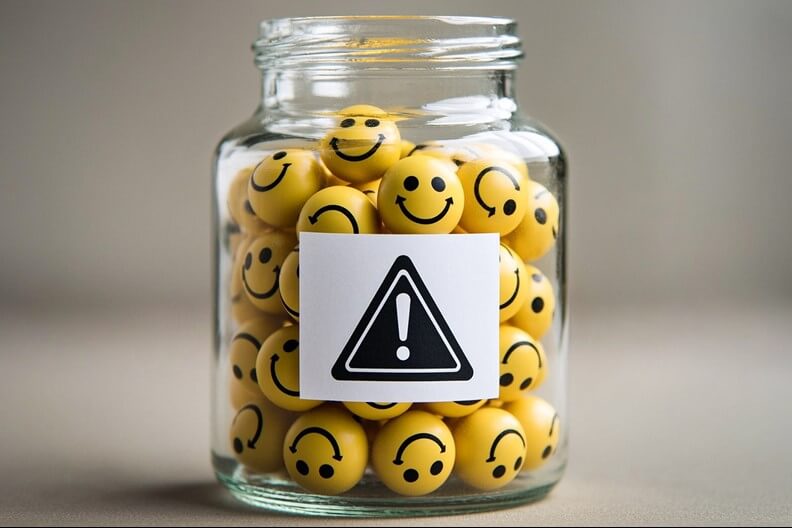
In most organizations, agreeableness is treated as a core cultural asset. Leaders encourage teams to be supportive, accommodating, and easy to work with, viewing these behaviors as the hallmark of a healthy environment. On the surface, this approach seems superior to a high-friction or combative workplace. Yet when maintaining social comfort becomes an organization’s unstated priority, quiet operational drift begins to take hold.
Kindness becomes problematic when it functions as a shield against uncomfortable truths. In overly accommodating workplace cultures, direct conversations are diluted, constructive debate is postponed, and performance issues are left unaddressed. Teams prioritize superficial alignment during meetings, only to diverge during execution. What feels like harmony in the moment often translates into unmanaged operational drag beneath the surface.
Research highlights the measurable cost of this dynamic. A study by McKinsey & Company revealed that 61% of executives feel at least half of the time they spend making decisions is ineffective (1). This inefficiency stems not from a lack of talent or intent, but from unfocused debate and ambiguous ownership. When organizations treat agreeableness as a substitute for clarity, decision-making stalls, and execution speed suffers.
CALIBRATING ASSERTIVENESS AND DECISION RIGHTS
To move past superficial harmony, leadership teams must establish clear decision-rights frameworks and recalibrate how assertiveness is viewed across the organization. All too often, team members hesitate to offer direct feedback or challenge ideas not because they lack courage, but because the boundaries around decision ownership are unclear. In the absence of defined decision rights, seeking broad consensus becomes the safest path for individual career preservation.
Calibrating assertiveness is a core requirement for leadership effectiveness. Research from Columbia Business School demonstrates that leaders low in assertiveness are consistently rated as less effective by their peers and reports, with 35% of failed leaders exhibiting extreme assertiveness miscalibration (2). Moderately high assertiveness, when paired with professional respect, optimizes influence and drives execution velocity. Directness is not personal aggression, but an operational necessity.
PRO TIP: Prior to high-stakes meetings, assign one single-threaded decision maker, a designated adviser set, and execution owners. Mandate a one-page pre-read with a single problem statement, then conclude the meeting by explicitly recording the decision owner, the communicator, and the first follow-up checkpoint.
When decision rights are explicit, teams no longer need to navigate vague consensus-seeking rituals. Clear roles allow individuals to voice differing perspectives openly during the debate phase, knowing that a single owner will ultimately make the call and drive progress forward.
THE QUANTIFIABLE DRAG OF UNMANAGED UNDERPERFORMANCE
The financial and operational costs of conflict avoidance are substantial. While leaders may delay difficult performance conversations to protect immediate team comfort, doing so places a heavy burden on top performers. High-performing employees thrive in environments defined by high standards, clear expectations, and mutual accountability. When underperformance is tolerated in the name of niceness, standards erode and top talent disengages.
The organizational consequences of weak accountability are well-documented. According to Gallup, teams operating under weak, conflict-avoidant leadership conditions experience up to 51% higher turnover, 78% higher absenteeism, and 30% more quality defects. Conversely, top-quartile teams with strong accountability and active engagement generate 17% higher sales productivity and 23% greater profitability (3).
Unaddressed underperformance sends a clear signal across the organization about what leadership is willing to tolerate. Over time, high performers grow frustrated by uneven workloads and diluted quality standards, eventually seeking environments where accountability is enforced consistently.
OPERATIONALIZING CANDOR ACROSS EXECUTIVE TEAMS
Transitioning an organization away from performative harmony requires real-time diagnostic tools to catch execution drift early. Misalignment rarely surfaces inside the conference room during initial strategic discussions. Instead, it emerges in the days following a meeting, as public agreement degrades into fragmented, uncoordinated execution across functional silos.
Leaders must establish communication protocols that normalize respectful disagreement and make real-time candor routine. Rather than treating direct feedback as an exceptional event or reserving it for formal performance cycles, high-performing teams integrate candid feedback into daily operational workflows. Separating task-based debate from personal relationships allows teams to interrogate assumptions without threatening interpersonal trust.
Detecting early signals of conflict avoidance, such as repeated meetings on the same topic, vague project updates, or hesitation to highlight operational risks, allows leaders to intervene before momentum is lost. Replacing superficial politeness with rigorous clarity protects organizational capacity and keeps strategic initiatives on track.
PRO TIP: Within 48 hours of an alignment session, the leader must issue a written recap categorizing outcomes into three categories: “Decided,” “Deferred,” and “Disagreed but Committed.” Direct reports must respond with one owned operational risk and dependency to catch execution drift before momentum stalls.
ALIGNING LEADERSHIP NORMS BEYOND DAILY OPERATIONS
Shifting an established corporate culture requires deliberate effort and dedicated space away from routine operational pressures. Daily calendars, packed with internal status meetings and administrative demands, rarely leave room for leadership teams to step back, re-examine communication norms, and recalibrate expectations around accountability.
Structured environments designed specifically for executive alignment offer a unique opportunity to address these behavioral dynamics. Off-site leadership retreats, strategic alignment summits, and executive workshops provide the necessary focus for top teams to practice direct communication, clarify decision-making protocols, and align on shared outcomes. Away from day-to-day operational distractions, leaders can engage in candid debate and establish agreed-upon guardrails for how their teams will operate moving forward.
A healthy workplace culture balances empathy and respect with unwavering operational standards. When leadership teams replace passive agreeableness with explicit expectations, transparent communication, and shared responsibility, trust grows alongside execution performance. The result is an organization capable of navigating complex challenges with speed, clarity, and mutual confidence.
Preparing a high-stakes alignment retreat to reset communication norms and establish clear decision-rights? Contact Gavel International to learn how we can help support your agenda and logistics.
_______________________
SOURCE(S):
1 https://www.mckinsey.com/capabilities/people-and-organizational-performance/our-insights/want-a-better-decision-plan-a-better-meeting
2 http://www.columbia.edu/~da358/publications/ames_pushing_up_to_a_point.pdf
3 https://www.ahtd.org/files/state-of-the-global-workplace-2024-key-insights.pdf

- When Niceness Becomes a Workplace Liability - September 21, 2026
- Turn AI Learning Into Workplace Capability - September 14, 2026
- Minimizing Process Friction for Faster Pipeline Execution - August 31, 2026